IELTS Speaking Topic Seasons là một trong những chủ đề phổ biến trong bài thi IELTS Speaking. Để đạt điểm cao với chủ đề này, thí sinh cần nắm vững từ vựng, cấu trúc câu và cách triển khai ý tưởng mạch lạc.
Bài viết này sẽ cung cấp bộ từ vựng chuyên sâu, bài mẫu Band 7.0+ cùng phương pháp luyện tập hiệu quả được xây dựng bởi LIT Education, giúp bạn tự tin chinh phục IELTS Speaking.
Bộ từ vựng ‘Ăn Điểm’ cho chủ đề Seasons
Từ vựng phong phú giúp thí sinh diễn đạt ý tưởng tự nhiên và ghi điểm với giám khảo. Dưới đây là các nhóm từ vựng quan trọng trong IELTS Speaking Topic Seasons.

Bộ từ vựng ‘Ăn Điểm’ cho chủ đề Seasons
Từ vựng miêu tả đặc điểm thời tiết từng mùa
Bảng dưới đây tổng hợp từ vựng miêu tả đặc điểm thời tiết theo từng mùa, giúp bạn diễn đạt tự nhiên và chính xác hơn trong IELTS Speaking.
| Mùa | Từ Vựng | Nghĩa & Ví Dụ |
| Spring | mild, breezy, refreshing | Ôn hòa, thoáng mát, sảng khoái – “The weather is mild and refreshing.” |
| Summer | scorching, sweltering, humid | Nóng như thiêu, oi bức, ẩm ướt – “Summer is often scorching hot.” |
| Autumn | crisp, cool, pleasant | Se lạnh, mát mẻ, dễ chịu – “Autumn brings crisp air.” |
| Winter | freezing, chilly, frosty | Lạnh cóng, se lạnh, sương giá – “Winter can be freezing cold.” |
Từ vựng về các hoạt động đặc trưng theo mùa (Seasonal Activities)
Mỗi mùa có những hoạt động riêng biệt. Việc nắm vững từ vựng này giúp thí sinh mở rộng câu trả lời một cách tự nhiên.
• Spring: go on a picnic (đi dã ngoại), plant flowers (trồng hoa), enjoy cherry blossoms (ngắm hoa anh đào)
• Summer: go swimming (đi bơi), have a barbecue (tổ chức tiệc nướng), go camping (đi cắm trại)
• Autumn: go hiking (đi leo núi), harvest crops (thu hoạch mùa màng), watch the leaves change color (ngắm lá đổi màu)
• Winter: go skiing (trượt tuyết), build a snowman (nặn người tuyết), stay cozy indoors (ở nhà ấm áp)

Từ Vựng Về Các Hoạt Động Đặc Trưng Theo Mùa (Seasonal Activities)
Idioms Và Collocations về chủ đề Seasons & Weather
Sử dụng idioms và collocations giúp câu trả lời trở nên tự nhiên và ghi điểm cao với giám khảo.
| Idiom/Collocation | Nghĩa | Ví Dụ |
| in full blossom | nở rộ hoàn toàn | The flowers are in full blossom. |
| under the weather | không khỏe, mệt mỏi | I felt under the weather yesterday. |
| rain or shine | dù thế nào đi nữa | We will go rain or shine. |
| a breath of fresh air | điều mới mẻ, tươi mát | Spring is a breath of fresh air. |
| send chills down the spine | lạnh buốt sống lưng | The cold wind sent chills down my spine. |
Tìm hiểu IELTS Speaking topic history để mở rộng câu trả lời Part 2 và Part 3.
IELTS Speaking Part 1 Topic Seasons: Câu hỏi và gợi ý trả lời
Part 1 yêu cầu thí sinh trả lời ngắn gọn, tự nhiên trong 20-30 giây mỗi câu. Dưới đây là các câu hỏi thường gặp trong IELTS Speaking Topic Seasons và cách trả lời hiệu quả.
What is your favorite season? (Mùa yêu thích của bạn là gì?)
Gợi ý trả lời: Đây là câu hỏi cơ bản. Thí sinh cần nêu mùa yêu thích, lý do và cảm xúc cá nhân.
Sample Answer: “My favorite season has to be autumn. I love the crispness in the air and the beautiful colors of the trees. The temperature is mild and pleasant, which makes it perfect for outdoor activities like hiking or having picnics in the park.”
Tell me about the different seasons in your country? (Các mùa ở nước bạn như thế nào?)
Gợi ý trả lời: Mô tả đặc điểm các mùa ở Việt Nam. Nêu sự khác biệt giữa miền Bắc và miền Nam.
Sample Answer: “Vietnam has a tropical climate with two main seasons: the rainy season and the dry season. However, the North experiences four distinct seasons like temperate countries. Summer is hot and humid, autumn brings mild weather, winter can be quite cold with occasional frost, and spring is warm with high humidity.”
How do the clothes people wear change with the seasons? (Trang phục thay đổi thế nào theo mùa?)
Gợi ý trả lời: Mô tả sự thay đổi trang phục theo mùa. Sử dụng từ vựng về quần áo.
Sample Answer: “People in Vietnam adapt their clothing to the seasons. During summer, we wear light fabrics like cotton and linen to stay cool. In winter, especially in the North, people bundle up in warm clothes like jackets, sweaters, and scarves. The rainy season calls for waterproof clothing and umbrellas.”
Do you prefer dry or wet weather? (Bạn thích thời tiết khô hay ẩm ướt?)
Gợi ý trả lời: Nêu sở thích cá nhân và lý do. Mở rộng bằng ví dụ cụ thể.
Sample Answer: “I definitely prefer dry weather. When it is sunny and dry, I feel more energetic and motivated to go outdoors. Wet weather tends to make me feel a bit gloomy, and it also limits my outdoor activities. Plus, dry weather is much more convenient for commuting.”

IELTS Speaking Part 1 Topic Seasons: Câu Hỏi Và Gợi Ý Trả Lời
Bài Mẫu IELTS Speaking Part 2: Describe Your Favorite Season
Part 2 yêu cầu thí sinh nói trong 1-2 phút về chủ đề được cho. Thí sinh có 1 phút chuẩn bị trước khi trả lời.
Dàn ý triển khai ý tưởng (cue card outline)
Sử dụng cấu trúc IWHC để triển khai bài nói: Introduction – What – How – Conclusion.
• Introduction: Giới thiệu mùa yêu thích (Spring, từ cuối tháng 12 đến giữa tháng 3)
• What it is like: Mô tả thời tiết (không quá nóng, không quá lạnh, nhiệt độ dễ chịu)
• Why you like it: Lý do yêu thích (cảnh đẹp, hoa nở rộ, không khí trong lành)
• What activities: Các hoạt động (Tết, sum họp gia đình, ẩm thực truyền thống)
• Conclusion: Tóm tắt cảm xúc và ý nghĩa của mùa này với bạn

Bài Mẫu IELTS Speaking Part 2: Describe Your Favorite Season
Luyện nói với IELTS Speaking topic travel cùng ý tưởng và từ vựng quen thuộc.
Bài mẫu tham khảo (sample answer) chuẩn band 7.0
“Today, I am going to tell you about my favorite season. My favorite is spring. It usually starts at the end of December in Vietnam and lasts until the middle of March.
The weather during spring is the best because you do not suffer from the scorching heat of summer or the freezing wind of winter. The temperature is mild and tolerable. Everywhere you look, landscapes are transformed with myriad colors as flowers come into full blossom. This sense of renewal makes spring truly breathtaking.
Spring is also the time for Tet, our traditional New Year celebration. It is a time for family reunions, paying respects to ancestors, and welcoming the arrival of a new year. The entire country is decorated with vibrant flowers, and there is an air of excitement and joy everywhere.
Furthermore, the food during spring is another reason I love this season. Traditional dishes like banh chung and banh tet are prepared and shared among families. These delicious treats symbolize unity and good fortune.
In conclusion, spring is my all-time favorite season because of its pleasant weather, stunning scenery, cultural significance, and delicious food. I look forward to spring every year.”
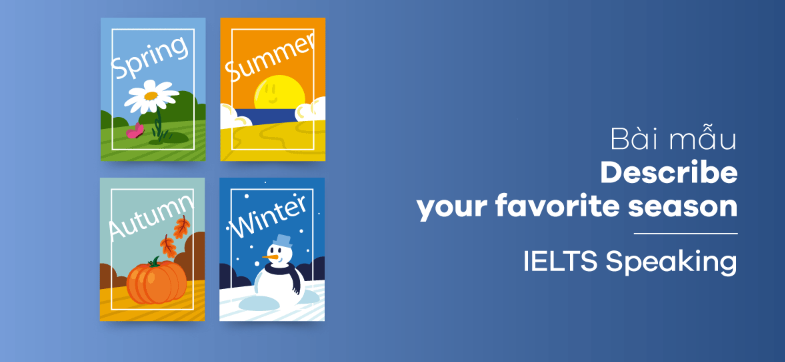
Bài Mẫu Tham Khảo (Sample Answer) Chuẩn Band 7.0
Phân tích ngữ pháp và cấu trúc câu nổi bật trong bài
Phần dưới đây phân tích các cấu trúc ngữ pháp và cách dùng câu nổi bật, giúp bài IELTS Speaking Topic Seasons trở nên mạch lạc và ghi điểm cao hơn.
| Cấu Trúc | Giải Thích & Ví Dụ |
| Passive Voice | “Landscapes are transformed…” – Sử dụng bị động để nhấn mạnh kết quả |
| Complex Sentences | “Because you do not suffer from…” – Mệnh đề nguyên nhân |
| Relative Clauses | “Dishes that are prepared and shared…” – Mệnh đề quan hệ bổ sung thông tin |
| Discourse Markers | “Furthermore”, “In conclusion” – Liên kết các ý trong bài |
Bài mẫu IELTS Speaking Part 3: Weather & Season
Part 3 yêu cầu thí sinh thảo luận sâu về các vấn đề liên quan đến chủ đề. Câu trả lời cần có độ dài 40-60 giây và thể hiện khả năng phân tích trong bài IELTS Speaking Topic Seasons
Do You Think Weather Has An Influence On People’s Mood? (Thời tiết có ảnh hưởng tâm trạng không?)
Sample Answer: “Absolutely. Weather has a profound impact on people’s emotional well-being. Research shows that sunny weather tends to boost our mood and energy levels, while prolonged periods of gloomy weather can lead to feelings of sadness or even seasonal depression. For instance, many people feel more productive and optimistic on bright, sunny days. Conversely, rainy or cold weather often makes people want to stay indoors and can lead to a more reflective or melancholic state of mind.”
Do You Think The Seasons Have Changed In Recent Years Compared To The Past? (Sự thay đổi khí hậu những năm gần đây)
Sample Answer: “Yes, I believe there have been noticeable changes. Climate change has caused significant shifts in seasonal patterns globally. In Vietnam, we have observed that summers are becoming hotter, with temperatures reaching 40°C (104°F) in some areas. Winters are becoming milder, and the rainy season often arrives earlier or later than expected. These changes have affected agriculture and daily life. Scientists attribute these changes to global warming and increased greenhouse gas emissions.”
What Are The Advantages/Disadvantages Of Living In A Place With Four Distinct Seasons?
Sample Answer: “Living in a place with four distinct seasons offers both benefits and challenges. On the positive side, you experience variety throughout the year, which prevents monotony. Each season brings unique activities and festivities. However, the disadvantages include the need for different wardrobes, higher energy costs for heating and cooling, and weather-related health issues. Additionally, extreme weather conditions can disrupt transportation and daily routines.”
Tham khảo IELTS Speaking topic friends để luyện trả lời các câu hỏi về bạn bè.
Mẹo nâng Brand điểm IELTS Speaking Topic Seasons
Nâng band điểm IELTS Speaking chủ đề Seasons bằng từ vựng, trải nghiệm cá nhân và câu trả lời tự nhiên
- Mở rộng từ vựng theo mùa: Học từ vựng mô tả thời tiết, hoạt động và cảm xúc đặc trưng từng mùa. Ví dụ, spring: bloom, mild weather; summer: scorching, outdoor activities; autumn: foliage, harvest; winter: chilly, snowfall. Từ vựng đa dạng giúp câu trả lời tự nhiên và nâng band ngữ pháp, từ vựng.
- Trình bày trải nghiệm cá nhân: Thay vì liệt kê các mùa, kể trải nghiệm, sở thích hoặc hoạt động bạn yêu thích trong mỗi mùa. Ví dụ, mô tả chuyến đi picnic mùa xuân hoặc đọc sách bên lò sưởi mùa đông. Cách này giúp câu trả lời sinh động và gần gũi.
- Sử dụng câu phức và liên từ: Kết hợp câu đơn, câu ghép, câu phức và liên từ như because, although, therefore để câu nói mạch lạc, thể hiện khả năng ngữ pháp đa dạng.
- Luyện phát âm & nhấn nhá từ khóa: Phát âm chính xác các từ mô tả mùa và trạng từ cảm xúc, nhấn nhá từ khóa để câu trả lời rõ ràng, dễ nghe và tự nhiên hơn.
- Chuẩn bị khung ý tưởng cho từng mùa: Xác định sẵn ý chính cho từng mùa để khi thi triển khai nhanh mà không học thuộc lòng. Ví dụ, mùa xuân: hoa nở, đi picnic; mùa hè: du lịch, bơi lội; mùa thu: lá vàng, thu hoạch; mùa đông: lạnh, đọc sách.

Mẹo nâng Brand điểm IELTS Speaking Topic Seasons
Xem thêm các dạng topic khác
Kết luận
IELTS Speaking Topic Seasons để đạt điểm cao với chủ đề này, thí sinh cần nắm vững từ vựng chuyên sâu, sử dụng idioms và collocations phù hợp, đồng thời phát triển ý tưởng mạch lạc và có chiều sâu. LIT Education cung cấp phương pháp học tập cá nhân hóa kết hợp công nghệ AI, giúp học viên cải thiện kỹ năng Speaking một cách hiệu quả. Với hệ thống sửa lỗi phát âm tức thì và lộ trình học tập được thiết kế riêng, học viên có thể chinh phục mục tiêu IELTS trong thời gian tối ưu nhất.